
For pool owners
The pool guide.
Compare materials, plan for the first weeks after replastering, and get familiar with the terms you’ll hear during a remodel.
Materials
Finishes & edges.
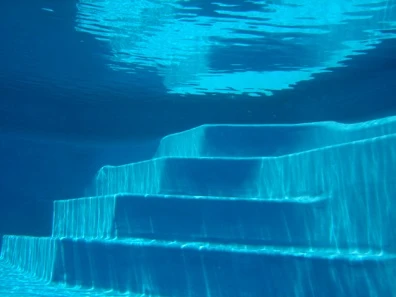
Water depth and light affect how a finish looks. Use project photos to narrow your choices, then ask Albert about material samples.
See finishes in real poolsTraditional white plaster
A smooth white interior gives an existing pool a fresh, simple starting point. Compare it alongside colored finishes in the project gallery.
See a white plaster poolQuartz & pebble finishes
Quartz finishes show a fine grain across the pool surface. In a pebble finish, you can see the individual stones on steps and benches. Compare the two in our project photos.
Waterline tile
A band of tile follows the water’s edge. Choose a quiet solid color or carry a pattern around the pool, spa, or raised wall.
Browse waterline tileBrick coping
Coping caps the pool wall where it meets the deck. Rounded brick edging comes in a variety of colors and profiles.
Browse brick copingDeck coatings
A concrete overlay can refresh the surface of an existing deck. Albert can look at the condition of your existing deck and discuss texture and color.
Explore deck overlaysPool start-up
Caring for new plaster.
Your finish needs particular care during its first 28 days. Confirm the fill, brushing, and water-testing plan for your exact finish with Albert before the work is complete.
Before the fill
Agree on who will start and monitor the fill. Once the team starts filling, keep it continuous until it reaches the level specified for your pool.
During start-up
Follow the finish manufacturer’s instructions for brushing and daily water testing. Ask your pool professional to interpret readings, make chemical adjustments, and confirm when swimming can resume.
Heaters & cleaners
Check the timing for restarting your heater, automatic cleaner, and salt system with your installer. The schedule depends on the finish and equipment.
National Plasterers Council start-up guidePool glossary
Words you might hear.
A quick reference for conversations about your existing pool and its new finish.
- Assist rail
- A handrail that helps swimmers enter or leave the pool at the steps.
- Belly band
- A strip of textured tile across the pool floor that marks the transition toward deeper water.
- Bond
- The adhesion between the finish and the surface beneath it.
- Bond coat
- A preparation layer that helps new plaster adhere to the existing pool surface.
- Code
- The building or health requirements that apply to a particular pool and project.
- Coping
- The cap along the top of the pool wall where the water meets the surrounding deck.
- Deck box
- An older style of electrical connection box at deck level. Ask a qualified professional about any existing pool-light connection.
- Delamination
- Separation of the plaster or finish from the material underneath.
- Depth markers
- Numbers or markings that indicate the water depth on the deck or at the waterline.
- Grab rails
- Paired handrails that help swimmers climb out using footholds in a pool wall.
- Ground-fault circuit interrupter (GFCI)
- An electrical protection device that interrupts power when it detects a ground fault.
- Gunite
- A mixture applied under pressure to form the structural shell of a concrete pool.
- Junction box
- An enclosure for electrical connections, such as wiring for a pool light.
- Plaster
- The cement-based finish applied to the inside of a concrete pool.
- Rebar stains
- Rust-colored marks that can appear when moisture reaches reinforcing steel in the pool structure.
- Trim tile
- Small accent tiles that can mark the edges of steps, ledges, or benches.
- Wall steps
- Footholds formed in the wall of a pool to help swimmers exit.
- Waterline tile
- The row of tile around the pool at the level of the water.
No matching term. Try another word.